Every flat in India is marketed and priced on super built-up area — a figure that includes corridors, lobbies, staircases, lift shafts, and shared amenities that no individual resident occupies privately, alongside the space inside the unit itself. For anyone evaluating flats in Guwahati, understanding how much of that quoted number represents carpet area — the space a family can actually furnish, move through, and live in — is the single most practical step a buyer can take before comparing prices.
Walk into two flats at the same listed size and price per square foot, and one can feel noticeably more spacious than the other. The reason is rarely layout alone — it is the ratio of carpet area to super built-up area, a number that varies by developer and building design and is rarely displayed prominently at the point of sale. The gap between what a brochure shows and what a family inhabits can reach thirty-five to forty percent in some developments.
This guide breaks down what carpet area, built-up area, and super built-up area each mean, how the difference affects the real value of any property, and what to ask before committing to any of the flats in Guwahati currently available in the market.
Carpet Area, Built-Up Area, Super Built-Up Area: What Each Number Actually Covers
Carpet area is the net usable floor space inside a flat — the area enclosed by the inner surfaces of the unit’s walls. It covers every room and space a resident uses privately: bedrooms, living and dining areas, kitchen, bathrooms, internal balconies, and utility areas. It does not include wall thickness or anything outside the flat boundary. Carpet area is the figure that determines how much space a household has for daily life.
Built-up area adds the thickness of the external and internal walls to the carpet area. Super built-up area goes further: it adds a proportional share of all common spaces — the entrance lobby, staircases, lift shafts, floor corridors, security areas, and shared amenity spaces. The loading factor — the percentage by which super built-up area exceeds carpet area — varies by how generously those shared spaces are designed.
What Loading Factor Means and How It Changes the Value of Every Square Foot
At a loading factor of twenty-five percent, every hundred super built-up square feet of a flat contains seventy-five square feet of carpet area. At thirty-five percent, that same hundred yields only sixty-five square feet of actual living space. Two luxury apartments for sale listed at the same per-square-foot rate but with different loading factors can deliver meaningfully different amounts of space that a family will occupy every day.
A higher loading factor is not automatically a disadvantage — a luxury apartments complex with landscaped corridors, a grand lobby, a gym, and well-maintained gardens will carry a higher loading factor than a minimal development. The question is whether what it funds is worth paying for across the ownership period. The full breakdown of how loading factors vary across Guwahati’s residential market is covered in the flats in Guwahati carpet area vs SBUA guide.
How to Compare Flats in Guwahati on What You Actually Pay For
The most reliable comparison method is simple: request the carpet area for each unit you are seriously considering, then divide the total flat price by that figure to get the price per carpet square foot. This removes the distortion loading factors introduce and gives a directly comparable number across developments, regardless of how each builder presents their pricing. Developers who provide carpet area figures readily tend to be more transparent operations overall.
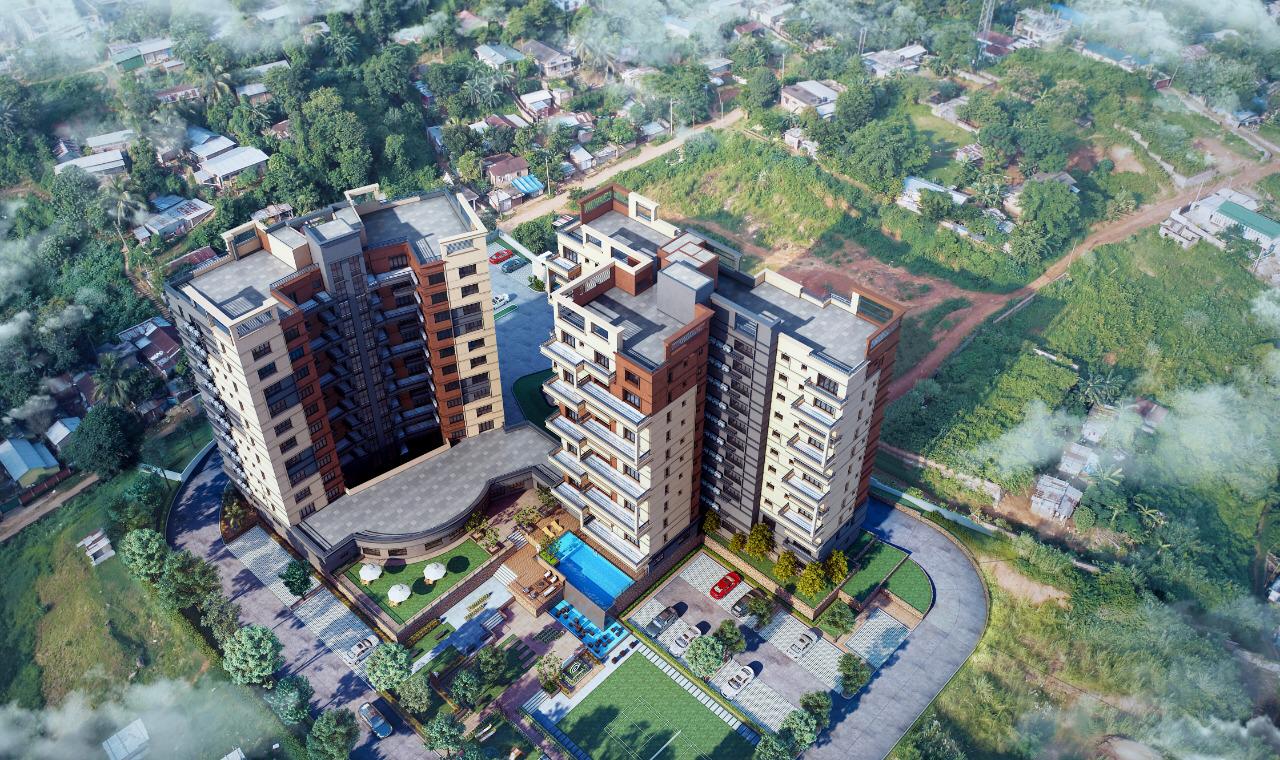
A luxury apartment in guwahati that appears more expensive per super built-up square foot may, on a carpet area basis, deliver better value than a cheaper option with a high loading factor. The total that matters is what each rupee buys in the space a family will actually inhabit — not what it buys on paper. Families who want to understand what a well-specified development looks like before making that calculation are welcome to visit Infinity Heights at Kalapahar. The luxury apartments guwahati at Infinity Heights are open for inspection on any ordinary day, and the common spaces — lobbies, gardens, and corridors — reflect the standard maintained throughout ownership.
Questions Worth Asking Any Developer Before You Commit
Before signing anything, ask the developer for the carpet area, built-up area, and super built-up area of the specific unit — not a project average. Ask whether monthly maintenance charges are calculated on carpet area or super built-up area, since that affects your cost every month across the ownership period. A developer selling luxury apartments who answers these questions with specifics rather than approximate figures is demonstrating the operational transparency that correlates with construction quality and post-handover management.
Also visit a completed, occupied project by the same developer — not a show flat, but an actual building where residents have lived for at least a year. The condition of the lobby and shared amenities on an ordinary weekday tells you far more than any specification sheet. For a luxury 4 bhk flat buyer at the significant end of the price range, that visit is one of the most valuable hours of the entire purchase process.
Frequently Asked Questions
What is the difference between carpet area and super built-up area in Guwahati flats?
Carpet area is the space inside your flat that you privately use — bedrooms, living areas, kitchen, bathrooms, and internal balconies. Super built-up area adds a proportional share of all common spaces: lobbies, corridors, staircases, lift shafts, and shared amenity areas. Most developers price and market flats on super built-up area, so the quoted size always includes considerably more than what any individual resident occupies. Asking for carpet area separately is the only way to know how much space you are actually buying.
How do I calculate the true price per square foot when comparing flats in Guwahati?
Ask each developer for the carpet area of the specific unit, then divide the total flat price by that carpet area figure. This gives you the price per carpet square foot — a number that can be compared directly across developments, regardless of differing loading factors. It is the only calculation that tells you what each rupee is buying in terms of space you will actually inhabit. Developers who provide carpet area figures clearly are generally more reliable operations overall.
Does a high loading factor mean a luxury apartment in Guwahati is poor value?
Not necessarily. A higher loading factor reflects more common space per unit — generous lobbies, landscaped areas, well-equipped shared facilities, and a quality entrance experience that a bare-bones building does not provide. The question is whether those common spaces are maintained to a standard that justifies the cost across the ownership period. Visiting a completed project by the same developer on an ordinary day is the most reliable way to answer that — and the most informative step a buyer can take before committing.
Conclusion
Flats in Guwahati are universally quoted and priced on super built-up area — a figure that includes shared spaces no individual resident owns. The gap between that number and carpet area, the space a family actually inhabits, varies by developer and building type, and it directly affects what each rupee of purchase price delivers in real, usable square footage. Buyers who request carpet area figures, calculate price per carpet square foot, and visit completed projects to see what the loading factor funds will consistently make more accurate comparisons — and identify the developments where the premium translates into genuine value, not just an impressive number on a brochure.
Start your search at www.infinityheights.in.
About the Author
Infinity Heights is redefining residential living in Guwahati and the wider North East India real estate landscape. As the developer behind Guwahati’s tallest residential resort, the project is built on a Smart Green philosophy — bringing together architectural quality, seismic safety, and ecological responsibility under one roof. Infinity Heights holds the Indian Green Building Council Green Homes Gold-rated certification, reflecting a genuine commitment to sustainable urban living.
To see how our community lives and celebrates together, watch our recent Holi celebrations here: https://youtu.be/OkgZ5Dg49qI
Explore our properties at www.infinityheights.in and follow us on Facebook, Instagram, YouTube, and LinkedIn, or find us on Google Business.