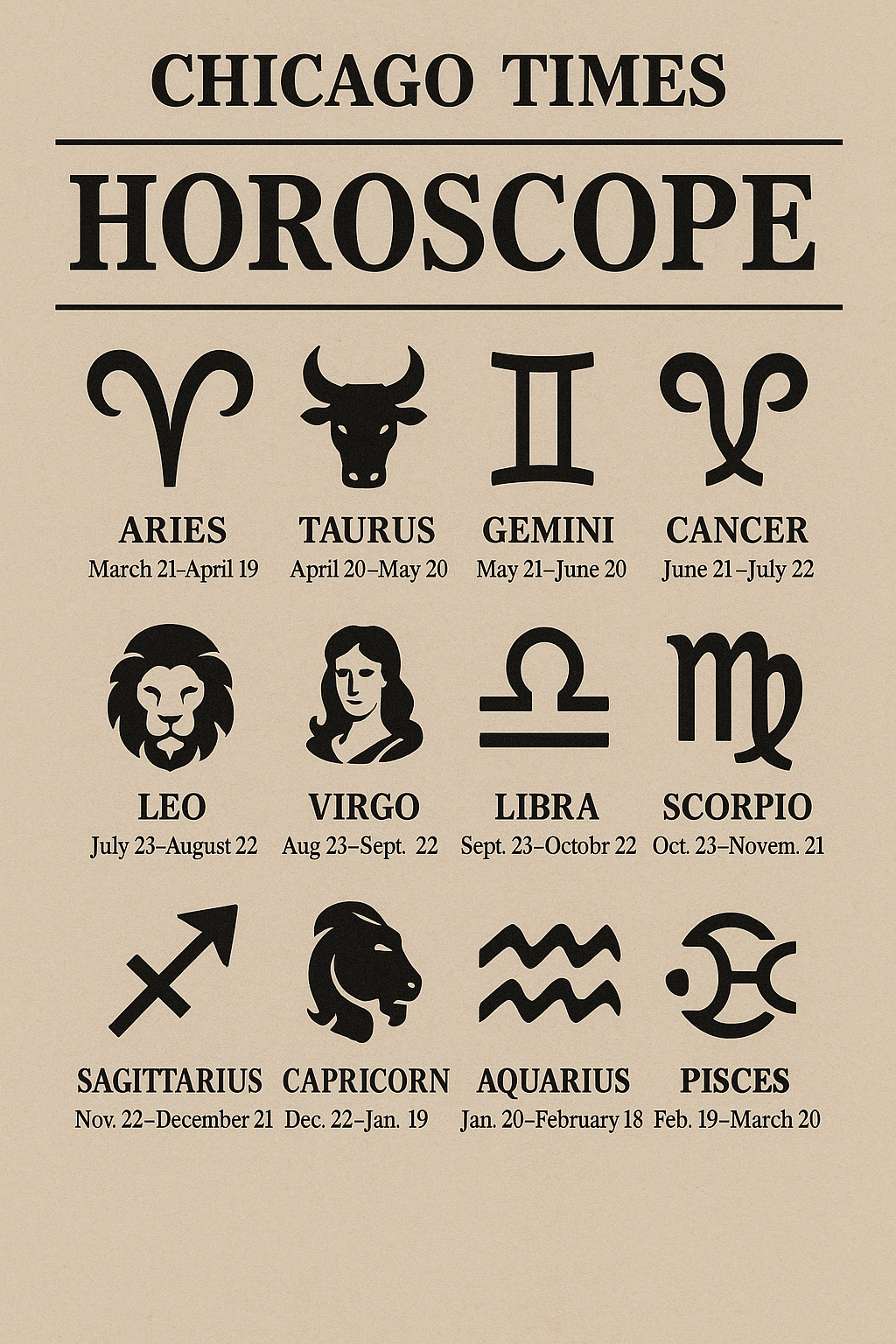
In a time of perpetual change and digital overload, people frequently look for deep insights into who they are and how to handle the challenges of daily life. Astrology, an age-old discipline that is nevertheless popular in contemporary media, is one timeless instrument for this kind of introspection. The Chicago Times horoscope is one of the reliable resources for astrological advice and is a daily companion for anybody interested in how the stars affect their personal and professional lives. It has developed into a useful tool for readers looking for balance, inspiration, and clarity by fusing ancient astrological concepts with contemporary sensibilities.
For each of the twelve signs of the zodiac, the Chicago Times horoscope offers a tailored daily forecast that covers topics such as financial decisions, relationship prospects, professional paths, and emotional well-being. In addition to being a mainstay of the paper’s lifestyle section, this daily item reflects a broader cultural trend: more individuals are using astrology to understand the patterns, moods, and energy impacting their decisions rather than as a tool for prediction.
Fundamentally, astrology is the study of how natural phenomena and human behavior are influenced by the positions and motions of celestial bodies. The Chicago Times horoscope simplifies this intricate subject into easily understood material so that readers can interact with the stars without requiring in-depth technical understanding. The daily readings are designed to help people make intelligent decisions in their daily routines, regardless of whether they are an adventurous Sagittarius or a resolute Taurus.
The Chicago Times horoscope’s dedication to diversity and relevancy distinguishes it from other astrological information. The horoscopes are designed with the modern reader in mind, rather than depending on nebulous assumptions. They make the content feel relevant and relatable by fusing traditional astrological symbols with modern concerns, such as office politics, digital exhaustion, wellness trends, and interpersonal limits. This strategy makes sure that astrology is still applicable in the fast-paced, constantly-changing world of today.
Emotional condition, career perspective, interpersonal dynamics, and self-growth are the four main life topics that are the emphasis of each Chicago Times horoscope. Readers can examine how planetary transits, such a full moon, a Saturn return, or Mercury retrograde, might seem in various spheres of their lives thanks to this arrangement. For example, a Capricorn may learn how to maximize productivity during a Mars alignment, while a Pisces may receive advice on managing emotional upheaval during a moon phase.
The daily readings are further supplemented with weekly and monthly horoscopes. These long-term projections are very useful for planning ahead and establishing goals. They frequently contain details about important astrological occurrences, such eclipses, planetary retrogrades, or new moons, all of which have symbolic significance in the astrological community. Readers may psychologically and emotionally get ready for chances and difficulties by knowing the cosmic weather.
For more complex readings, the Chicago Times horoscope also incorporates planetary transits, rising signs, and moon signs. A deeper link can be made by recognizing the impact of other signs in an individual’s chart, even though sun sign horoscopes offer a general perspective. In order to comprehend how various aspects of their personalities interact and react to cosmic changes, readers are frequently urged to examine their complete birth chart. The Times provides easy-to-follow instructions for learning more about this complex system for both astrologers and novices.
The Chicago Times horoscope’s allure extends beyond self-reflection. It frequently acts as a conversation starter, a way for friends to bond, or a way to share a cultural experience. People compare their horoscopes and consider if the predictions match their reality in coffee shops, offices, and internet discussion boards. In a society that is becoming more and more individualized, this communal component makes astrology a social phenomena that promotes connection.
Additionally, astrology has therapeutic applications. Numerous readers claim that horoscopes assist them in processing their feelings, recognizing personal trends, and considering areas that require development. Reading about establishing limits during a Venus transit could help a Libra who is struggling with people-pleasing feel less alone. A Gemini who receives guidance on concentrating their dispersed energies may come to see the necessity of structure in their day-to-day existence. The Chicago Times horoscope encourages readers to become more self-aware and emotionally intelligent by acting as a daily mindfulness exercise.
From a journalistic perspective, the horoscopes are written by qualified astrologers who combine artistic writing with scientific accuracy. To produce well-considered forecasts, these professionals examine planetary charts, aspects, and locations. However, their use of lyrical language and sympathetic tone—achieving a balance between cosmic wisdom and human warmth—is what really makes it more appealing. This literary element guarantees that the information is both entertaining to read and educational.
The Chicago Times horoscope has become more widely available on digital channels in recent years, such as social media, email newsletters, and smartphone apps. Readers can now more easily obtain their daily dosage of celestial wisdom thanks to these channels. Users are further engaged by interactive tools that provide a multifaceted spiritual experience, such as lunar calendars, tarot readings, and zodiac compatibility testing. Astrology’s incorporation into the digital lifestyle demonstrates how ageless knowledge and modern convenience may coexist.
Furthermore, millennials and Gen Z have contributed to the comeback of astrology in popular culture, which has increased demand for advanced astrological content. Horoscopes are seen by these generations as instruments for introspection, self-care, and empowerment rather than as fate-bound prescriptions. This perspective is supported by the Chicago Times horoscope, which presents astrology as a flexible framework as opposed to a deterministic doctrine. This enables readers to use astrology as a lens rather than a guide, taking what speaks to them and discarding what doesn’t.
Astrology’s detractors frequently draw attention to its lack of scientific support. Many Chicago Times horoscope readers, however, find value in the feeling of structure, meaning, and personal connection it offers rather than in its perfect accuracy. Just as philosophy or literature provide direction without supporting evidence, astrology is a symbolic framework that people can use to make sense of their life. Accordingly, horoscopes are more about assisting individuals in actively interacting with the present than they are about forecasting the future.
To sum up, the Chicago Times horoscope is still a well-liked and esteemed standard in the field of contemporary astrology. It assists readers in discovering their potential, coping with life’s uncertainties, and cultivating inner development by fusing everyday observations with more expansive cosmic tales. There is something incredibly human about taking the time each day to think about what the stars might be telling you, regardless of whether you are a skeptic, an experienced astrologer, or someone in the middle. Horoscopes like the ones provided by the Chicago Times will continue to light our paths with a dash of cosmic enchantment as long as people are looking for direction, wonder, and connection.